/prod02/channel_1/t4_pending/media/hngr/Sara-and-Jackie.png)
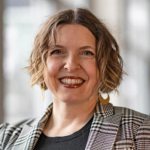
Dr. Allison Ruark
Boarding the plane to South Africa in late September for the Micah Global consultation, I wasn’t sure I could still laugh. The weight of situations personal and global simply felt too heavy. It’s been a devastating year in my field of global health, as the U.S. government has cut foreign aid by 80% and left millions of people worldwide without food, healthcare, and other forms of vital assistance. Many of my colleagues are out of work, but far worse than the damage to these livelihoods is the impact on the world’s poor and vulnerable. The reality is that children (and mothers, fathers, and grandparents) are dying as the world’s rich countries turn away. Rather than stepping up to fill the gap left by the U.S., European countries are also decreasing their foreign aid.
The catastrophic events of the year were never far from our minds during the consultation. I flip through my notes, and see lament on page after page. Not just over the demise of health and development programs, but over the climate crisis, the devastating conflicts in Ukraine and Gaza and South Sudan (59 active conflicts in 39 countries, by one count), the trauma and injustice everywhere. I served on the “listening team” throughout the consultation, and over and over heard talk of wineskins. In a time of seismic shocks, when old systems and certainties have been swept away, what old wineskins do we need to repent of, and discard? What are the new wineskins, and how is God leading us forward now, into new things? I think we were asking the right questions, but I didn’t hear clear answers.
We could collectively affirm that we are called to do the work of the church, with or without funding. Together we could remember that Biblical hope is rooted in God and his character, promises, and work in the world, and not in people or circumstances. Yet on the road to real hope there is no shortcut past painful lament. One speaker told us, “Be honest with God about how bad things are; sit in dust and ashes.” I will not soon forget the words of an African development professional, as she described how programs were shrinking drastically with the loss of funding. She mused that we might be entering a time of dormancy, of slow growth under the soil. Certainly, God is always at work. “But yet, we know children are dying now, will die,” she said.
I’m writing this during the season of Advent, which is a season of waiting for light to come. As I listened the other day to one of the long genealogies of Jesus, I was reminded that God was setting Jesus’ birth in motion centuries in advance, before bringing him into the world at exactly the right time. (Jesus was born into a world wracked by just as much chaos and oppression as our world today, I might add.) The foremothers and forefathers in those genealogies saw at best only glimmers of what God was doing, and they waited for hundreds of years for the promise of Jesus to be fulfilled. God is still the great orchestrator of history, and the author and finisher of each of our journeys of faith. The greatest gift of my time in Cape Town was that in the midst of my personal darkness and deep lament, God reminded me of this, in powerful and unexpected ways.
Returning to the Mother City (Cape Town) feels like going home, as that region of South Africa was my home from 2015 to 2020. I was anticipating reunions with old friends, and the soul solace of drinking in South Africa’s spectacular natural beauty. What I wasn’t anticipating was new friends who would minister to my heart in deep ways. I shared lodging with Sara, an environmental scientist who twenty years ago started Uganda’s chapter of A Rocha (a Christian creation care organization). Uganda is a country where I’ve spent a lot of time and which is close to my heart, so I’m always excited to make another Ugandan friend, but Sara’s journey of faith spoke to me more deeply than I could have expected. We spent hours talking about our lives, and she prayed powerful prayers over me in the way that only my African sisters can.
I met Jackie from Kenya on the flights over and discovered that we both have PhDs in public health, and I was eager to learn more about Jackie’s amazing work with widows in Kenya. A few nights later we went to dinner and realized how much we actually had to talk about. I nearly fell off my chair when she told me she had gone to Williams College, my alma mater. She was a leader in the same InterVarsity Christian fellowship I had been, a decade after me. As she described her experience at Williams, I was overwhelmed by the thought that God had actually been weaving our stories together years before. My service to the fellowship, and years of fervent prayer that our fellowship would more fully come to resemble the whole body of Christ, had been laying a foundation for the students who came later, including Jackie. Jackie’s journey from a poor family in rural Kenya to a small college in rural New England is remarkable, a story that only God could write. I still get chills thinking about the fact that not only had God brought us both there, but had allowed us to meet years later in South Africa and discover the many ways our work and heart passions align, including a shared passion for vulnerable women in Africa. Jackie, like Sara, has chosen paths that wouldn’t make sense according to most people’s logic, except that God had spoken. Their faith kindled mine, and I believe God allowed our lives to intersect for reasons that are bigger than a great friendship.
I don’t know how God will continue to work his salvation and justice in the world, as we wait for light and answers that are not yet here. I know that He holds every detail of my life in His hands, sovereignly and tenderly. In South Africa he restored my hope that if He can do this for me, he can also do it for the whole world.
Public Health
Reflection Written as part of Stott Fellows 2025