/prod02/channel_1/t4_pending/media/hngr/Massad-banner.png)
Dr. Alexander Massad
When I applied for the Stott Fellowship I was not completely sure what to expect from the experience. I knew that there would be discussions with Palestinian, Latino/a, and South African Christians, but I could not have anticipated the influence these brothers and sisters would have on me. Although we at Wheaton College aim to be an institution that blesses the global church, we are desperately impoverished on campus with representation of the global church. This poverty can result in an anemic understanding of the Gospel, at worst, or, at the very least, an insular Christian faith and practice. The Stott Fellowship decentralizes the majority paradigms of our campus experience to reveal the depth and complexity of what it means to follow Jesus. As Lesslie Newbigin affirms in The Gospel in a Pluralist Society, although it is impossible for one to break out of our contextual understanding of the Gospel alone, it is possible to do so when those from other contexts preach the Gospel to us. For me, participating in the Stott Fellowship was meaningful because it decentralized my cultural Christianity and elevated the Christian faith and practice of brothers and sisters around the world.
As an educator, scholar, and public speaker I was put in a position that questioned the relevance of my positions. For example, in the United States I have given talks about the theological problems of Christian Zionism. However, hearing from Palestinian, South African, and Latino/a Christians whose theological beliefs are not merely intellectual debates but can result in violent oppression forced me to reconsider the risks I am willing to take professionally to speak and act on behalf of oppressed peoples. From this conviction I worked to generate numerous potential projects ranging from academic articles, to online micro-certificate programs, to advocating for Arab cultural expression on campus, to accrediting Bethlehem Bible College classes with Wheaton programs to offer places for Wheaton students to learn about Christianity from Palestinians.
The overall conviction I took from the program is that America and American Christianity are not the center of the Gospel, not the center of the church, and not the center of what it means to follow Jesus. This conviction was epitomized in the small, but growing, position that the participants should no longer look to Christians in the United States because the ills that befall their communities are coming from the United States. If Wheaton College wants to remain relevant to the church then we must take into account how the church around the world experiences the Christianity we produce and the ill effects it has on Latino/a, African, and Arab societies (not to mention many others). If people are dying because of what we believe, the very least we can do is speak and act more forcefully in the spaces God has given us influence. To not do so would be negligent of the Gospel, at best, and, at worst, perpetrating oppression and violence.
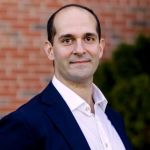 Dr. Alexander Massad
Biblical and Theological Studies
Reflection written as part of Stott Fellows 2025