Cultivating Transformation on Stage and in the Classroom: Mark Lewis
Professor of Communication, Program Director of Arena Theater
Words: Juliana Bacote ’24
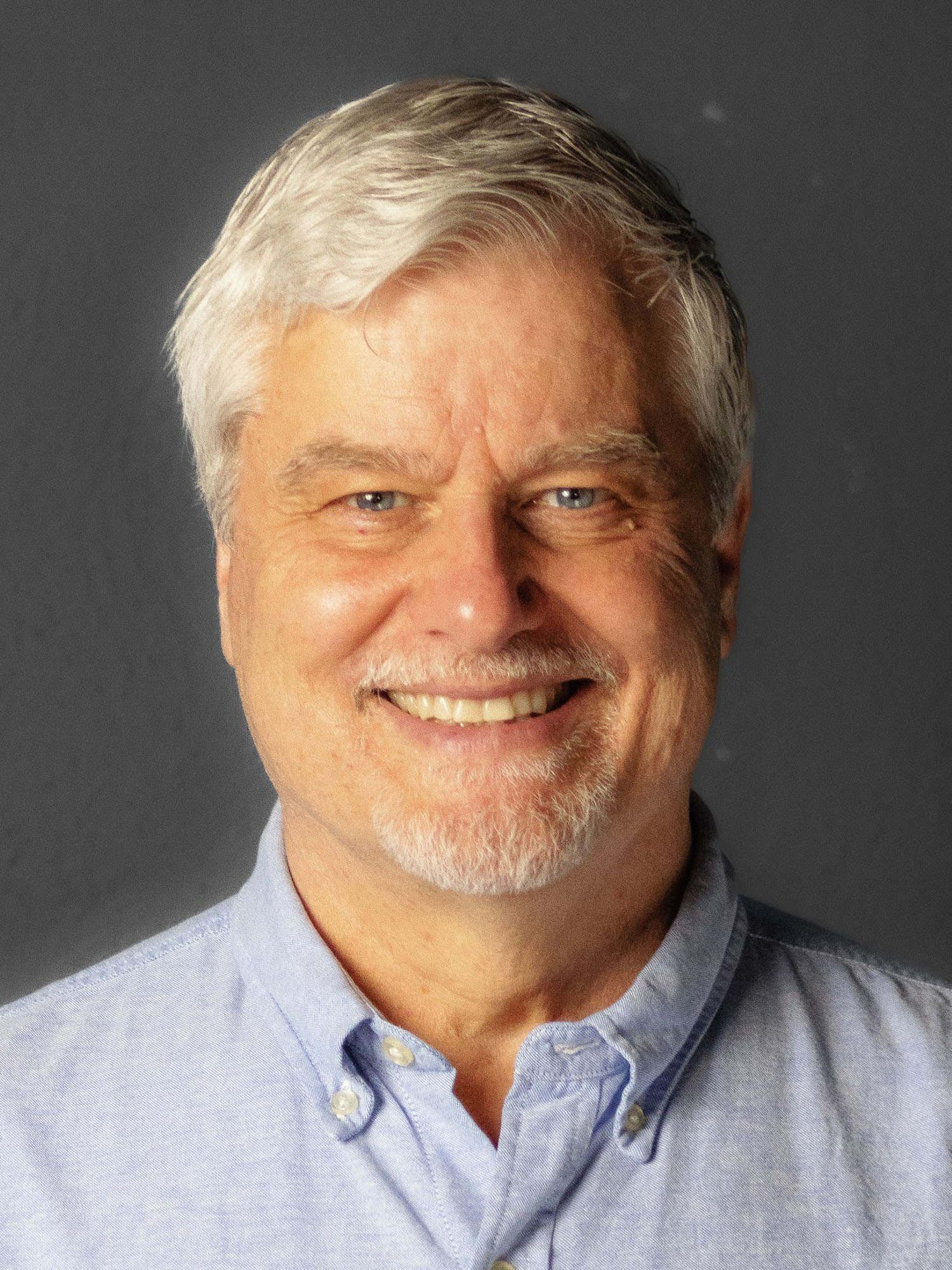
Mark Lewis
When it comes to integrating faith with theater in the classroom, Mark Lewis doesn’t have to do very much. “I don’t have to paint the topic of faith onto the theater conversation,” he said. “If, as an actor, I am trying to be truthful, that will automatically impact the ways I’m trying to be truthful in my life. The conversation will become about Jesus because theater addresses the most important things we can talk about as human beings.”
Lewis has graced soap opera television sets and stages in New York. But those accomplishments are not what fulfill him. His students are.
Lewis was drawn to theater at a time when many Evangelical Christians viewed it as a sin. “Many said that theater was really antithetical to the Christian faith,” Lewis said.
When he graduated as a theater major from Portland State University, to say his parents were not pleased would be an understatement. “My dad especially thought I had lost my way.”
Without telling his family, Lewis auditioned for the M.F.A. in Acting program at Southern Methodist University. Upon completing this program, Lewis moved to New York, where he worked as a professional actor for more than a decade. Then, his call to teach at Wheaton came.
His arrival on campus was not his first time on Wheaton’s soil, however. While completing his undergraduate degree, Lewis met Jim Young, the founder of Workout, Wheaton’s theater ensemble, when traveling throughout the U.S. as a member of a gospel quartet. Even though Lewis was not enrolled at the College, Young invited him to participate in Workout after Lewis graduated from Portland State. During the semester he participated, Young opened Lewis’ eyes regarding what it means to be an actor and a follower of Jesus. “At the time, I didn’t understand much about what Jim Young was doing in that space,” said Lewis. “But, he redeemed the idea for me that you could call yourself an actor and be a person of faith. He also helped me see that it’s necessary to acknowledge your brokenness in order to heal, which is implemented into much of what we continue to do in Arena.”
Years after this transformative semester, Young invited Lewis to apply to take his place. Initially, Lewis did not want to apply. “If someone had told me when I was thirty that I was going to be a teacher, I would have been insulted,” Lewis said.
Yet, he couldn’t ignore advice from his former theater professor and mentor, Michael Howard, and his pastor, Tim Keller, who both encouraged him to apply. “Tim Keller said to me, ‘God can red pencil anything, so just try it for a year,’” Lewis recalled. “So, I did. And here I am, thirty years later.”
Lewis’ “classroom” is usually the open, carpeted space where Workout is held in Jenks Hall, which is lined with large windows that allow sunlight to pour into the room. It is in this space that Lewis aims to create a “good learning room,” like that of a sanctuary. “You know a worship service where something about you is being understood, and you’re able to participate in something that feels transformative?” asked Lewis. “That’s what we aim to have occur in theater rooms, too. As those of us in the room co-create, transformation takes place.”
This, Lewis says, is the heart of both the theater and the church. “To act is to be a person that is affectable by others,” he said. “It’s about creating spaces where people can learn from others and become more sensitized to another person’s point of view.”
Each moment Lewis spends with students in these spaces is what he calls a divine appointment. “From the classroom to the plays I direct, I experience a series of these appointments, and it’s such a privilege for me,” Lewis said. “With every appointment, I want students to feel seen. I want to conduct rooms in such a way that people are not going to feel like they’re invisible to me or each other. I aspire for these to be rooms where students feel both more fully seen and more fully loved.”
Learn more at wheaton.edu/communication.